

Full mouth reconstruction becomes necessary when a single procedure can no longer address the extent of damage across your teeth, gums, and bite. It is not a cosmetic upgrade but a comprehensive, personalized treatment plan that restores the function, health, and appearance of your entire mouth at once, built for patients dealing with multiple overlapping problems that a single fix cannot solve.
At Rivers Dentistry in Carbondale, Colorado, Dr. Connor Rivers has extensive experience in complex restorative care, including dental implant placement and full-mouth rehabilitation. As a fee-for-service practice, we are never constrained by insurance limitations when building your treatment plan, and every recommendation is made with your long-term health in mind.
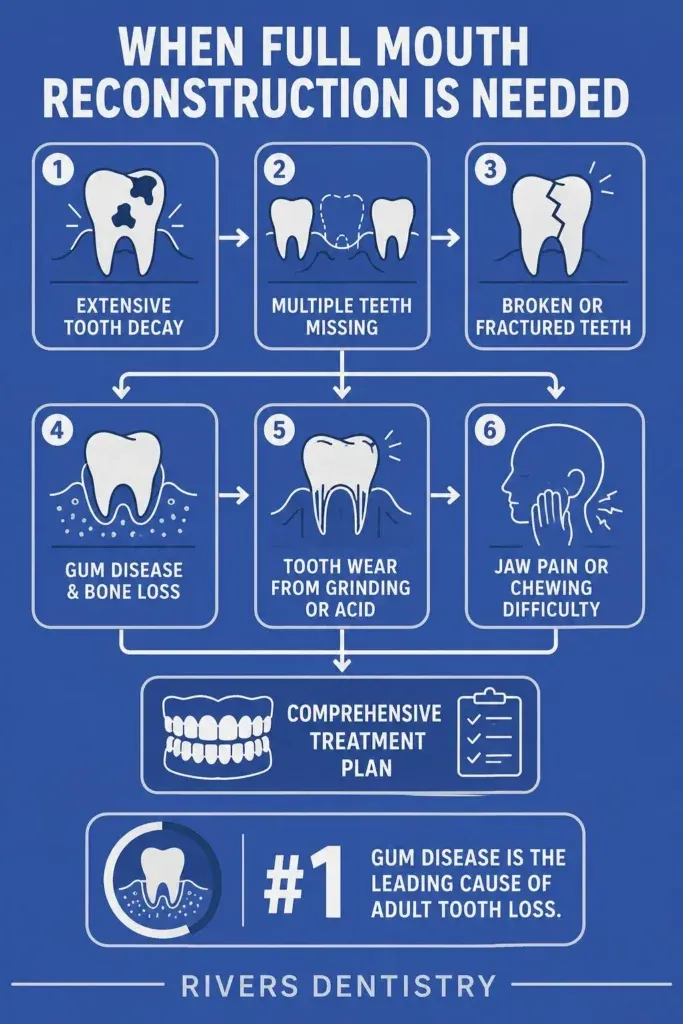
When Full Mouth Reconstruction Becomes Necessary
Full mouth reconstruction is typically recommended when multiple oral health issues are present at the same time and have begun to affect one another. A cracked tooth left untreated becomes a candidate for extraction. A missing tooth causes neighboring teeth to drift, which then creates bite problems. Gum disease leads to bone loss, which compromises the stability of the surrounding teeth. These conditions compound over time, which is why a coordinated, comprehensive plan is so much more effective than addressing each problem one by one.
Conditions That Often Require Reconstruction
Several factors may indicate that a full reconstruction approach is needed.
- Severe or widespread tooth decay affecting multiple teeth at once
- Multiple missing teeth that have altered your bite or jaw alignment
- Teeth that are broken, fractured, or no longer structurally sound
- Advanced periodontal disease that has caused bone loss
- Significant tooth wear from bruxism or acid erosion
- Chronic jaw pain, TMJ discomfort, or difficulty chewing
According to the National Institute of Dental and Craniofacial Research, periodontal disease is the most common cause of tooth loss in adults, and significant disparities in tooth loss persist across certain population groups, underscoring the importance of early, comprehensive treatment for long-term outcomes. The American College of Prosthodontists similarly notes that patients with several missing, decayed, or worn teeth benefit most from a coordinated plan rather than isolated repairs. If you recognize several of the above conditions in your own experience, a full evaluation can help clarify which approach is right for you.
What the Reconstruction Process Involves
Full mouth reconstruction unfolds in a carefully sequenced series of stages rather than a single appointment. Treatment typically begins by addressing any active disease. Periodontal treatment to eliminate infection and dental crowns to protect compromised teeth are often completed first, establishing a healthy foundation before restorative work begins.
Once the mouth is stabilized, replacement and restoration procedures can move forward. Dental implants are a cornerstone of many reconstruction plans for patients with missing teeth, providing a permanent, natural-feeling solution that preserves the jawbone and supports the surrounding structures. Our article on dental implant success rates explains what influences how well implants integrate over time. In cases where most or all teeth have been lost, implant-supported dentures offer a level of stability and function that conventional dentures cannot match.
What a Personalized Plan Typically Costs and Covers
Every reconstruction plan is different because every mouth arrives at this point differently. A plan built around crowns and a handful of implants looks nothing like one that involves periodontal surgery, bone grafting, and full-arch implant-supported dentures. During your evaluation, Dr. Rivers walks through each phase, the materials involved, and a realistic cost range before any treatment begins, so you are never guessing what comes next or what it will require financially.
Sedation Options Throughout Treatment
Multi-step, complex treatment does not have to be stressful. Because reconstruction often involves several procedures over an extended period, patient comfort is a priority throughout the entire process. We offer the full spectrum of sedation dentistry, including nitrous oxide, oral sedation, IV sedation, and hospital-level general anesthesia administered in our office by licensed anesthesiologists. This means that even patients with significant dental anxiety can move through their reconstruction plan with confidence and ease.
Our digital scanning technology also plays a meaningful role in the experience. Every restoration is planned and designed using precise digital impressions rather than traditional goop-based molds, producing more accurate results in a more comfortable process.
How Long Does Reconstruction Take?
Timelines vary depending on the extent of treatment needed and how your body heals between procedures. A straightforward reconstruction involving crowns and a few implants may be completed within several months, while more complex cases that include bone grafting, extensive oral surgery, or full mouth implant placement can take a year or longer. For a closer look at implant timelines specifically, our guide on how long the dental implant process takes breaks down each stage in more depth. While the process requires patience, the result is a fully restored, functional mouth built to last for years to come.
Maintaining Your Results Long Term
A reconstruction is only as durable as the habits that follow it. Consistent brushing, flossing, and professional cleanings protect both natural teeth and restorations, and wearing a nightguard is often recommended for patients whose original damage stemmed from grinding or clenching. Routine follow-up visits let us catch small issues, such as a loosening crown or early gum inflammation, before they threaten the investment you have made in your smile.
Start Your Reconstruction Plan at Rivers Dentistry
Dr. Rivers takes the time to walk you through every stage of your plan, explain all available options, and make sure you feel confident before any treatment begins. Patients from throughout Garfield, Pitkin, and Eagle Counties have trusted us to deliver the kind of personalized, unhurried care that makes a real difference, and our fee-for-service model means your treatment is never shaped by what an insurance company will approve.
If you have been living with multiple dental problems and are ready to take a meaningful step forward, our team is here to help you develop a plan that works for your needs, timeline, and goals. To schedule a comprehensive evaluation with Dr. Rivers, contact our office today.
Frequently Asked Questions About Full Mouth Reconstruction
What is the difference between a smile makeover and full mouth reconstruction?
A smile makeover is primarily cosmetic and focuses on appearance. Full mouth reconstruction addresses function, health, and structure first, and cosmetic results follow as part of restoring a healthy, working mouth.
Will my insurance cover full mouth reconstruction?
Coverage depends on your specific plan and which procedures are included. As a fee-for-service practice, we build your plan around your health needs first and provide clear cost information and financing options during your evaluation.
Do I need to be sedated for the entire reconstruction process?
Not necessarily. Sedation is offered for procedures that call for it, and many stages, such as follow-up adjustments, do not require it at all. Your comfort level and the procedure both factor into the decision.
Can full mouth reconstruction fix jaw pain from TMJ issues?
Reconstruction can often improve bite alignment that contributes to jaw discomfort, particularly when worn or misaligned teeth are part of the underlying cause. A full evaluation determines whether TMJ-specific treatment is also needed.
How many appointments does full mouth reconstruction usually require?
The number of visits depends entirely on the scope of your plan, ranging from a handful of appointments for more limited cases to a year or longer of staged treatment for extensive rebuilding.
